SKIN HEALTH & WELLNESS
Skin Health and Wellness in Southeast Calgary
When something changes with your skin, getting the right assessment is a good place to start. Empathy Collaborative Health provides patient-centred medical care for common skin concerns in southeast Calgary, from acne and persistent rashes to infections, moles, and changing skin growths. Dr. Omolola Obadan is a family physician with additional postgraduate dermatology training and dermatology-focused GP experience.
Your physician can examine the area, review your symptoms and health history, and discuss practical next steps. Depending on the concern, this may include treatment, monitoring, testing, an available procedure, or referral.
Acne & Breakouts
Assessment of recurring or persistent acne and treatment options.
Rashes & Irritation
Evaluation of redness, itching, inflammation, and possible skin reactions.
Moles & Skin Changes
Assessment of new or changing spots, growths, and lesions.
Ongoing Skin Care
Treatment, monitoring, testing, or referral based on clinical needs.
MEDICAL CARE FOR SKIN CONCERNS
Understand What Your Skin Is Telling You
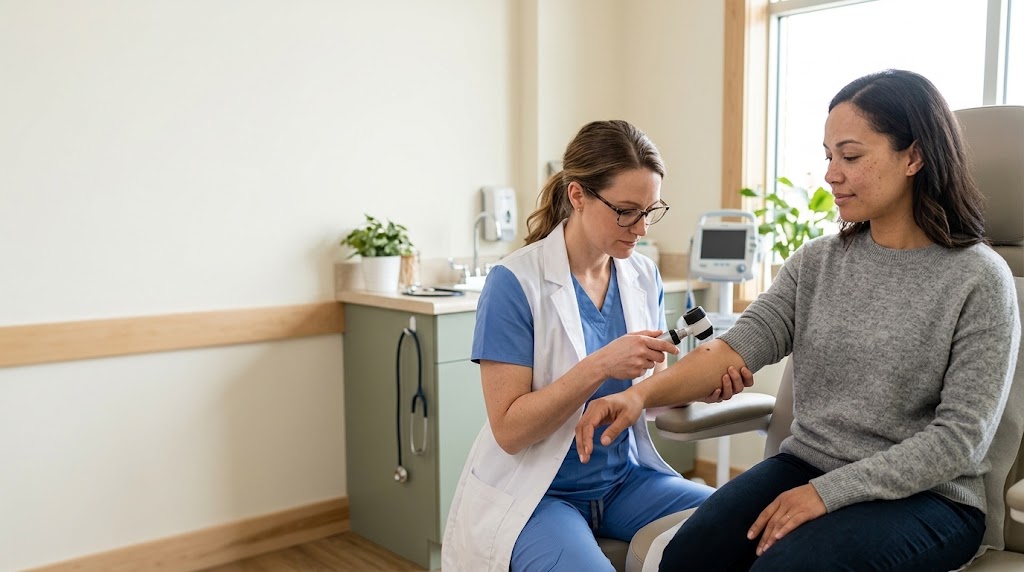
Skin changes can have many possible causes, including irritation, infection, inflammation, allergies, medication reactions, hormonal changes, or sun exposure.
Because different conditions can look similar, an examination may be needed before treatment can be recommended. Online photographs or symptom descriptions may not provide enough information for a diagnosis.
For broader health concerns that may be related to medications, hormones, or other conditions, learn more about our Family Medicine services.
SKIN CONDITIONS WE MAY ASSESS
Common Skin Concerns We Can Assess
Acne & Breakouts
Blackheads, whiteheads, inflamed pimples, deeper lesions, recurring breakouts, and concerns about inflammation or scarring.
Rashes & Itchy Skin
Redness, irritation, dry or inflamed skin, possible eczema, allergic or irritant reactions, and other causes of itching.
Skin Infections
Possible bacterial, viral, or fungal infections. Treatment may involve medication, testing, wound care, follow-up, or another service.
Moles, Spots & Growths
New or changing moles, spots, lumps, skin tags, warts, lesions, and other skin growths that may require assessment.
Hair, Scalp & Nail Changes
Changes involving the hair, scalp, nails, skin colour, texture, or previously diagnosed skin conditions requiring follow-up.
Sun-Related Skin Changes
Assessment of concerning changes related to sun exposure and discussion of monitoring, investigation, or referral when appropriate.
Service availability depends on age, the type of concern, and the clinic’s current scope of care.
FROM ASSESSMENT TO FOLLOW-UP
How Skin Health Care May Help
1. Examine the Concern
Your physician reviews symptoms, medical history, medications, exposures, and the affected area.
2. Consider Possible Causes
Different skin conditions can appear similar, so testing, monitoring, or another visit may sometimes be needed.
3. Discuss a Care Plan
Care may include skin-care guidance, non-prescription products, medication, testing, an available procedure, or referral.
4. Review Progress
Some skin conditions improve gradually or return over time. Follow-up may help review response and adjust the plan.
Acne, Rashes & Skin Infections
Acne Assessment & Treatment
A physician may review acne type and severity, when breakouts began, products and treatments already tried, medications, health conditions, hormonal factors when relevant, and signs of inflammation or scarring.
Treatment may involve non-prescription skin care, prescription topical medication, oral medication, or referral. Results vary and no particular medication or outcome can be guaranteed.
Rashes, Irritation & Itchy Skin
A physician will consider where the rash appears, how it has changed, possible exposures, accompanying symptoms, and treatments already attempted.
Care may involve skin-care recommendations, medication, testing, monitoring, or referral.
Skin Infections
Skin infections may be bacterial, viral, or fungal. A physician may determine whether medication, testing, wound care, follow-up, or another service is appropriate.
Some procedures or laboratory tests may need to be completed outside the clinic.
Moles, Spots & Skin Growths
Most moles and skin growths are not cancerous, but a new or changing area should be assessed when there is concern.
Changes that may warrant medical attention include a new or unusual growth, changes in size, shape, colour or texture, irregular borders, bleeding, crusting, itching, tenderness, a sore that does not heal, or a spot that looks different from others.
These features do not automatically mean a growth is cancerous. A medical assessment is needed to determine whether monitoring, biopsy, removal, or referral may be appropriate.
Skin Cancer Assessment & Referral
A physician may examine a concerning skin change and discuss whether further investigation is appropriate. This may include monitoring, photography, biopsy, or referral. An examination cannot guarantee that skin cancer will be detected or ruled out.
LASER HAIR REMOVAL
Considering Laser Hair Removal?
Laser hair removal is listed on the clinic’s existing Skin Health page. Contact Empathy Collaborative Health to confirm whether this service is currently available, who provides it, which device is used, and which areas or skin and hair types may be treated.
Laser hair removal generally aims to reduce hair growth rather than guarantee permanent removal. Results vary, and multiple sessions may be required.
Potential risks can include temporary discomfort, redness, swelling, blistering, infection, pigment changes, burns, scarring, or eye injury. Suitability should be assessed before treatment and appropriate protective equipment is required.
Before booking, ask about: operator training and experience, the device and its authorized purpose, expected benefits and limitations, possible risks, preparation and aftercare, number and timing of sessions, and total fees.
What to Expect at a Skin Health Appointment
Before Your Appointment
- Note when the concern began and how it changed.
- Bring medications, supplements, and skin products.
- Bring photographs showing previous changes if available.
- Avoid covering the area with makeup when possible.
- Bring previous biopsy or dermatology reports if requested.
During Your Appointment
The physician reviews your symptoms and examines the affected area. You may be asked about allergies, medications, sun exposure, family history, previous treatments, and other medical conditions.
A diagnosis may not always be possible during the first appointment.
After Your Appointment
Follow the treatment and skin-care instructions provided. Ask when results may be expected, when follow-up is recommended, and how test or biopsy results will be communicated.
Some skin conditions require consistent care over time.
Coverage & Fees
Medically necessary physician assessments may be covered for eligible Alberta residents. Cosmetic treatments, cosmetic removals, laser hair removal, and some procedures may not be covered. Confirm fees before booking.
In-Person & Virtual Care
Many new skin concerns require an in-person examination. Some follow-up discussions may be suitable for phone or video care.
Emergency Concerns
Empathy Collaborative Health does not provide emergency care. If you believe you are experiencing a medical emergency, call 911.
Request a Skin Health Appointment
Contact Empathy Collaborative Health to ask about appointment availability, age requirements, procedures, cosmetic services, and possible fees.
Unit 104/106, 11420 27th Street SE, Calgary, Alberta T2Z 3R6
587-864-4152 • Empathycollaborativehealth@gmail.com